Menu

How To Paint Concrete Floors

How To Paint Concrete Floors

Everyone knows that a fresh coat of paint can instantly update a space, but have you ever considered painting concrete floors? If not, you could be missing out on a flooring update that not only enhances appearance but also adds durability and long-lasting protection. Painting is an affordable way to upgrade garages, basements, patios, and workshops without expensive renovations.

Gather Your Supplies

Before beginning any DIY concrete painting project, it’s important to have your supplies ready. Being organized will cut down on wasted time and ensure a smoother process. Here’s a checklist of essential tools and materials you’ll need for painting a concrete floor:

1. Prepare the Concrete Floor

Proper surface preparation is the most important step when you paint a concrete floor. Start by scraping away dried paint, glue, or debris. Then scrub with a degreaser to ensure the surface is clean.

Before moving forward, check the floor’s condition:

  • Moisture test – Tape plastic sheeting and check for condensation after 24 hours. Too much moisture means you must wait before painting.

  • Porosity test – Drip water onto the surface. If it soaks in, you’re ready; if it beads up, you may need to etch or grind the concrete.

  • Efflorescence – Remove powdery white deposits using diluted vinegar or a specialized cleaner.

Finally, repair cracks with concrete filler, sand smooth, and let the floor dry fully before priming.

2. Apply Primer

Using a concrete bonding primer ensures that the paint properly adheres to the floor. Skipping this step can lead to peeling or uneven coverage. Options include:

Cut in edges with a brush, then roll the primer evenly. Allow 6–8 hours of drying time depending on humidity.

Use a paintbrush to cut in around the edges, posts or other structures. Then roll the primer evenly across the rest of the floor. Avoid overworking it—rolling too much can lift the primer and reduce adhesion. One coat is typically enough, but if the concrete is especially porous or uneven in color, a second coat might help.

Let the primer dry fully before painting. Most primers need 6–8 hours to cure, but drying time can vary based on humidity, ventilation and temperature. In humid spaces, consider using a fan or dehumidifier to help the primer dry completely.

If you notice streaks, tackiness or spots where the primer didn’t adhere, go back and check for lingering moisture or unclean areas. As always, proper prep makes all the difference.

3. Paint the Concrete Floor

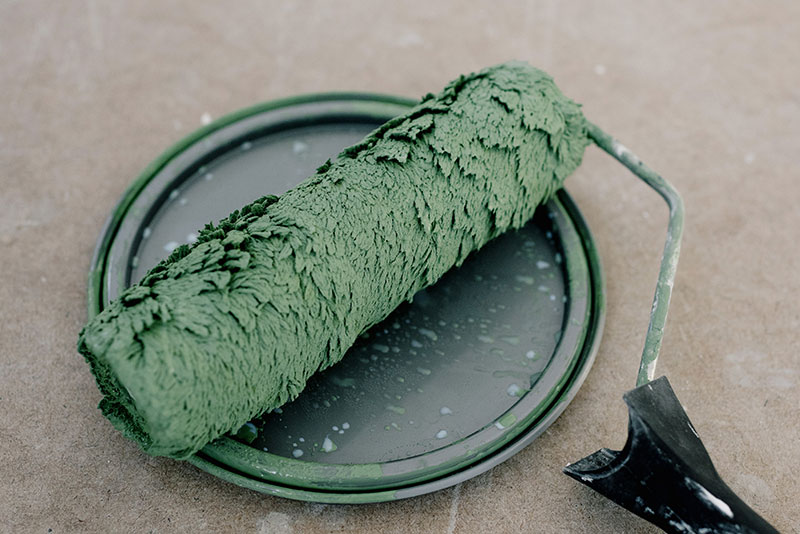
painting concrete floor
Photo by: Ksenia Chernaya on Pexels.com

The best paint for concrete floors is typically epoxy paint, known for its durability, stain resistance, and heavy-traffic performance. Other options include latex acrylic paint for light use, or polyurea coatings for professional-grade protection.

At ICS, we recommend epoxy paint for most garage floors, basements, and utility rooms because it provides the longest-lasting results. Apply at least two coats, letting each dry fully before the next.

If you’re unsure what to use, stop by your local ICS store for expert guidance. We’ll help you to determine the right product for your project and environment.

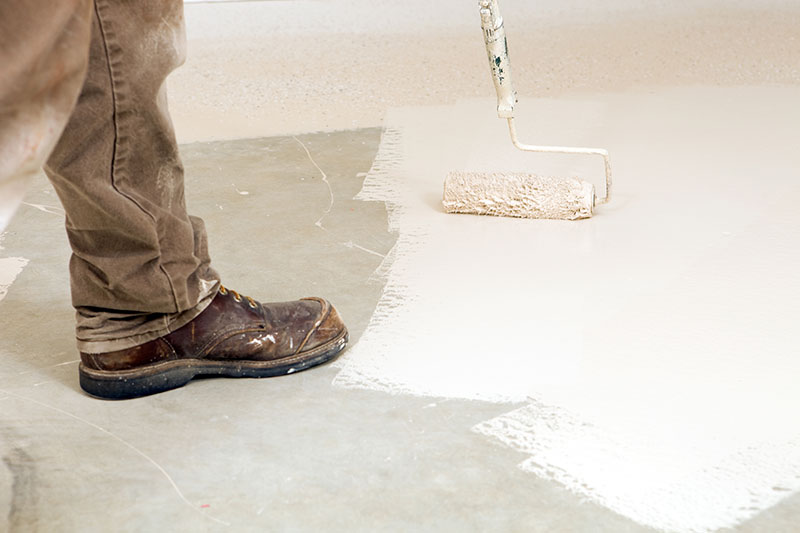
Once you’ve selected your paint, apply it just like you did with the primer. Cut in along the edges and around any posts or structures, then roll out the main surface. Epoxy paint goes on thick, so make sure to spread it evenly without pooling. Two coats are usually best to ensure full coverage and long-term durability.

Let each coat dry completely before moving on to the next, and follow the manufacturer’s instructions for proper cure times.

Troubleshooting and Maintenance Tips

Even with proper prep, issues can happen when you paint concrete floors:

  • Peeling paint – Usually caused by moisture or skipping primer.
  • Bubbling – Applying paint too thickly or over damp concrete.
  • Slippery surface – Add a non-slip additive for safety in wet or high-traffic areas.

After painting, wait 72 hours before moving heavy furniture or vehicles onto the surface. To extend the life of your painted concrete floor, clean with non-abrasive cleaners and avoid dragging sharp or heavy items.

FAQs About Painting Concrete Floors

Do you need to etch concrete before painting?

You only need to etch or grind concrete if the surface is too smooth or dense. A simple water test will tell you—if water beads up instead of soaking in, the surface needs etching to help the paint bond properly.

What’s the best paint for garage floors?

The best paint for garage floors is epoxy paint because it’s durable, chemical-resistant, and built to withstand heavy traffic. For lighter use, latex acrylic paint works, but epoxy provides the longest-lasting finish.

How long does painted concrete flooring last?

<p”>When properly prepped, primed, and sealed, a painted concrete floor can last 5–10 years in low-traffic areas and up to 20 years in garages or basements with epoxy coatings. Regular cleaning and resealing extend the lifespan.

Can you paint over old concrete paint?

Yes, you can paint over old concrete floor paint if it’s still in good condition. Lightly sand the surface to improve adhesion. If the old paint is peeling or flaking, it’s best to strip it and start fresh.

Why does concrete floor paint peel or bubble?

Peeling or bubbling paint usually means the concrete wasn’t prepped correctly. Moisture, dirt, or skipping primer are the most common causes. To prevent issues, clean thoroughly, check for moisture, and always use a bonding primer.

Is epoxy better than latex for concrete floors?

Yes—epoxy paint is stronger, more durable, and more resistant to chemicals, stains, and heavy wear than latex acrylic paint. Latex is easier to apply and clean up, but epoxy is the better choice for garages, basements, and high-traffic areas.

How soon can you walk or drive on painted concrete?

You can walk on a painted concrete floor in 24–48 hours, but wait at least 72 hours before placing heavy furniture or driving on it. Drying times depend on paint type, humidity, and temperature.


Our ICS team has helped thousands of homeowners and contractors achieve flawless painted concrete floors. Need expert advice or supplies? Visit your local ICS store or contact us today for personalized guidance.

Ryan Duncan Photo

Ryan Duncan

President

Ryan Duncan is the President of Intermountain Concrete Specialties, a leading provider of concrete supplies and rental equipment in Utah and Idaho. Ryan brings a wealth of expertise to the role, having joined the company in 2010. Over the years, he has developed an in-depth understanding of all facets of concrete construction equipment and supplies. ... Learn More